
Are Electric Unicycles Street Legal? What State Laws Say (2026)
Affiliate disclosure: product links on this page go to Amazon, or to the maker's own store for brands that sell only direct. As an Amazon Associate we earn from qualifying purchases, at no extra cost to you; a link to a maker's store earns us nothing. No retailer or brand sees our picks before they are published or has any say in them. How we choose.
In most of the US, the law does not say. Of the seven states whose statutes we read, two define a one-wheel self-balancing device: Washington (under 20 mph and 2,000 W average) and Arizona (limited to 15 mph). Everywhere else, an electric unicycle falls between the categories the law does define (e-bikes, e-scooters, two-wheel self-balancing devices), and whether you may ride one on a road, bike lane or sidewalk is unclear. City rules can be stricter than state law. We read each statute on October 9, 2026; this page describes what the texts say and is not legal advice. For every state and DC, including five more that cover one-wheel devices (Utah, New Hampshire, Montana, Virginia and the District of Columbia), see our electric unicycle laws by state table.
Why EUCs fall through the gaps
Federal law covers how the product is built and sold, not where you ride it. The Consumer Product Safety Commission's June 24, 2026 proposed battery rule names electric unicycles as micromobility products, but riding rules are set by each state's vehicle code and by cities.
The codes we read define three kinds of small electric device:
- Electric personal assistive mobility devices (EPAMDs). Written for Segway-type machines; five of the seven states we read define them as self-balancing on two wheels side by side.
- Motorized or electric scooters. Often defined with handlebars, a floorboard and two or more wheels.
- Electric bicycles. Defined by pedals and assist limits.
An EUC has one wheel, no handlebars and no pedals in the bicycle sense, so it fails at least one element of most of these definitions. When a device fits no defined category, the code usually does not say where it may go, and some codes default to treating any powered vehicle as a motor vehicle.
State by state: what the statutes say
| State | Closest category | Key limits in the definition | Does an EUC fit? |
|---|---|---|---|
| Washington | EPAMD (RCW 46.04.1695) | Self-balancing, one wheel, one person, average power up to 2,000 W, top speed under 20 mph | Yes, if the wheel is under those limits |
| Arizona | EPAMD (ARS 28-101) | Self-balancing, one wheel or two side by side, speed limited to 15 mph or less, one person | Yes, if limited to 15 mph |
| Florida | Motorized scooter or micromobility device (F.S. 316.003) | Scooter: motor, not more than three wheels, not capable of more than 20 mph | Possibly, for wheels that cannot exceed 20 mph; unclear above that |
| Oregon | Motor assisted scooter (ORS 801.348) | Not more than four wheels, foot support or seat, up to 24 mph, electric output up to 1,000 W | Unclear; the text could cover a small, slow wheel |
| California | Electrically motorized board (Vehicle Code 313.5) | A floorboard designed to be stood on, average power under 1,000 W, top speed up to 20 mph | Unclear; the code does not say whether EUC pedals count as a floorboard |
| New York | None (VTL 114-d, 114-e, 125) | EPAMD needs two wheels; e-scooter needs handlebars | No category fits; state law is unclear |
| Texas | None (Transportation Code ch. 551) | EPAMD needs two wheels side by side; motor-assisted scooter needs at least two wheels | No category fits; state law is unclear |
Washington
Washington added a second branch to its EPAMD definition in 2015: "a self-balancing device with one wheel designed to transport only one person by an electric propulsion system with an average power of two thousand watts," with a maximum speed under 20 mph (RCW 46.04.1695). Under RCW 46.61.710, an EPAMD rider must obey speed limits, yield to pedestrians and give an audible signal before passing one, and otherwise has the rights and duties of a pedestrian. Cities and the state DOT may ban EPAMDs on roads posted above 25 mph, cities may restrict their speed in crowded areas, and agencies may regulate them on trails and in parks. Wheels faster than 20 mph or above 2,000 W average are outside the definition.
Arizona
Arizona defines an EPAMD as "a self-balancing device with one wheel or two nontandem wheels and an electric propulsion system that limits the maximum speed of the device to fifteen miles per hour or less" that carries one person (ARS 28-101). The same section counts an EPAMD user as a pedestrian and excludes EPAMDs from the definition of a motor vehicle. A wheel that can go faster than 15 mph does not meet the definition as written. Arizona's "motorized skateboard" needs at least two tandem wheels, so it does not fit an EUC either.
Florida
Florida's definitions are broad (F.S. 316.003). A "motorized scooter" is "any vehicle or micromobility device that is powered by a motor with or without a seat or saddle," designed to travel on not more than three wheels and not capable of more than 20 mph on level ground. A "micromobility device" is a motorized device for individual use, typically 20 to 36 inches wide and 50 pounds or less, that operates typically under 15 mph and no faster than 28 mph. On its face a one-wheel device limited to 20 mph could fit the first. Under F.S. 316.2128, motorized scooter and micromobility operators have the rights and duties of bicycle riders, need no registration, insurance or driver license, and local governments may regulate them on streets and sidewalks. Florida's EPAMD definition requires two wheels side by side.
Oregon
Oregon's "motor assisted scooter" is a vehicle designed to run on not more than four wheels, with a foot support or seat, that "can be propelled by motor or human propulsion" and whose power source cannot exceed 24 mph, with electric output of not more than 1,000 W (ORS 801.348). Its EPAMD is self-balancing on two wheels side by side with a 15 mph top speed (ORS 801.259). Whether an EUC is a motor assisted scooter is not settled by the text, and the statute does not say whether rated or peak output counts, so check your wheel's figures and local rules.
California
California's EPAMD is a "self-balancing, nontandem two-wheeled device" (Vehicle Code 313), and a "motorized scooter" is a two-wheeled device with handlebars (Vehicle Code 407.5). The closest category is the "electrically motorized board" (Vehicle Code 313.5): any wheeled device "that has a floorboard designed to be stood upon when riding," no more than 60 inches deep and 18 inches wide, with an average power under 1,000 W and a top speed of no more than 20 mph. The code does not say whether an EUC's fold-out pedals are a floorboard. Where a device is a board, the rules are strict: riders must be 16 or older, wear a bicycle helmet (21292), stay on roads posted 35 mph or less unless in a Class II or IV bikeway, and never exceed 15 mph (21294). At night a board needs a white front light visible from 300 feet and rear and side reflectors (21293).
New York State and New York City
New York's vehicle code defines a motor vehicle as "every vehicle operated or driven upon a public highway which is propelled by any power other than muscular power," then lists exceptions, including EPAMDs outside cities of a million people or more, e-bikes and electric scooters (VTL 125). An EPAMD must be self-balancing on two non-tandem wheels, under 750 W and under 12.5 mph (VTL 114-d), and an electric scooter "has handlebars, a floorboard or a seat" and tops out at 20 mph (VTL 114-e). An EUC fits neither exception, and we found no provision that addresses it, so its status under state law is unclear.
New York City's DOT chart of legal e-bikes, mopeds and e-scooters does not list electric unicycles; it describes e-scooters as having handlebars and a floorboard or seat, sets a 15 mph limit for e-bikes and e-scooters, and keeps them off sidewalks (NYC DOT, Electric Bicycles and More). Separately, Local Law 39 of 2023 requires battery-powered mobility devices and their batteries that are sold, leased or rented in the city to be certified by an accredited lab, to UL 2272 for devices other than e-bikes. The city announced enforcement from September 16, 2023, with civil penalties of up to $1,000 per model for businesses, and said the law does not apply to devices already in use unless they are resold or rented (NYC Department of Consumer and Worker Protection).
Texas
Texas defines an EPAMD as "a two non-tandem wheeled device" that is self-balancing with an average power of 750 W (Transportation Code 551.201) and lets riders use roads posted 30 mph or less only to cross, where no sidewalk exists or when directed, plus bike paths (551.202). Its "motor-assisted scooter" needs at least two wheels, a braking system, a deck and the ability to be propelled by human power alone (551.351). An EUC fits neither, so Texas law is unclear (Transportation Code chapter 551).
States we did not cover
We cover only states whose statutes we read in full. For any other state, look up three definitions in its vehicle code: electric personal assistive mobility device, motorized or electric scooter, and motor vehicle. Then check whether any of them is written for one wheel and what speed or power limits apply. If none fits, ask your city transportation department or police non-emergency line how they treat EUCs.
Checklist before you ride in public
- Find your state's definitions and check your wheel's speed and power against them.
- Check city and county ordinances: Florida and Washington law both leave room for local rules on streets, sidewalks and trails.
- Check park, campus and transit rules, which often ban powered devices.
- Set your wheel's speed limit in its app to match any statutory cap that applies.
- Wear a helmet even where no law requires one, and carry lights at night.
Where a city ties sales rules to certification, buy a wheel listed to UL 2272; our UL 2272 and battery safety guide explains what that covers. Pick a certified helmet from our helmet guide, and see how tiltback works before you set a speed limit in the app. If a state's rules favor scooters, our EUC vs e-scooter comparison may help, and commuters can compare wheels in the best commuting wheels.
Frequently asked questions
Are electric unicycles street legal in the US?
There is no single answer, because each state sets its own rules and most vehicle codes do not mention one-wheel devices. Washington's code clearly covers one-wheel self-balancing devices under 20 mph and 2,000 W, and Arizona's covers them if limited to 15 mph. In the other states we read, the law is unclear.
Can I ride an electric unicycle on the sidewalk?
Only where your state or city allows it. Washington gives EPAMD riders the rights and duties of pedestrians, and Arizona counts an EPAMD user as a pedestrian, but both apply only to wheels within their definitions. New York City keeps e-bikes and e-scooters off sidewalks, and Florida lets local governments regulate sidewalk riding.
Do I need a license or registration for an electric unicycle?
None of the state codes we read creates a license or registration for EUCs. Florida says motorized scooters and micromobility devices need no registration, insurance or driver license. New York's code defines any powered vehicle on a public highway as a motor vehicle unless an exception applies, and no exception covers an EUC.
Are electric unicycles legal in New York City?
NYC DOT's chart of legal devices lists e-bikes, mopeds and e-scooters, not electric unicycles, and state law has no category that fits them. Separately, Local Law 39 of 2023 requires mobility devices sold, leased or rented in the city to be certified to UL 2272. Check with the city before riding on streets.
Are electric unicycles legal in California?
California law does not name them. Its EPAMD and motorized scooter definitions require two wheels, and its electrically motorized board needs a floorboard, which may or may not include EUC pedals. Boards are limited to riders 16 and older, 15 mph, roads posted 35 mph or less, and require a bicycle helmet.
Do I need to wear a helmet on an electric unicycle by law?
Usually only where the device falls into a category with a helmet rule. California requires a bicycle helmet on an electrically motorized board, and NYC requires helmets for 16 and 17 year olds on e-scooters. Most codes we read set no helmet rule that clearly reaches EUCs, but a certified helmet is worth wearing regardless.
Sources
- RCW 46.04.1695 Electric personal assistive mobility device (EPAMD), Washington State Legislature
- RCW 46.61.710 Mopeds, EPAMDs, motorized foot scooters, personal delivery devices, electric-assisted bicycles: General requirements and operation, Washington State Legislature
- Arizona Revised Statutes 28-101, Definitions, Arizona State Legislature
- The 2026 Florida Statutes, 316.003 Definitions, Florida Legislature
- The 2026 Florida Statutes, 316.2128 Micromobility devices, motorized scooters, and miniature motorcycles; requirements, Florida Legislature
- Oregon Revised Statutes chapter 801, General Provisions and Definitions (2025 edition), Oregon State Legislature
- California Vehicle Code 313.5, California Legislative Information
- New York Vehicle and Traffic Law 125, Motor vehicles, New York State Senate
- Electric Bicycles & More, NYC Department of Transportation
- Texas Transportation Code chapter 551, Operation of Bicycles, Mopeds, and Play Vehicles, Texas Legislature
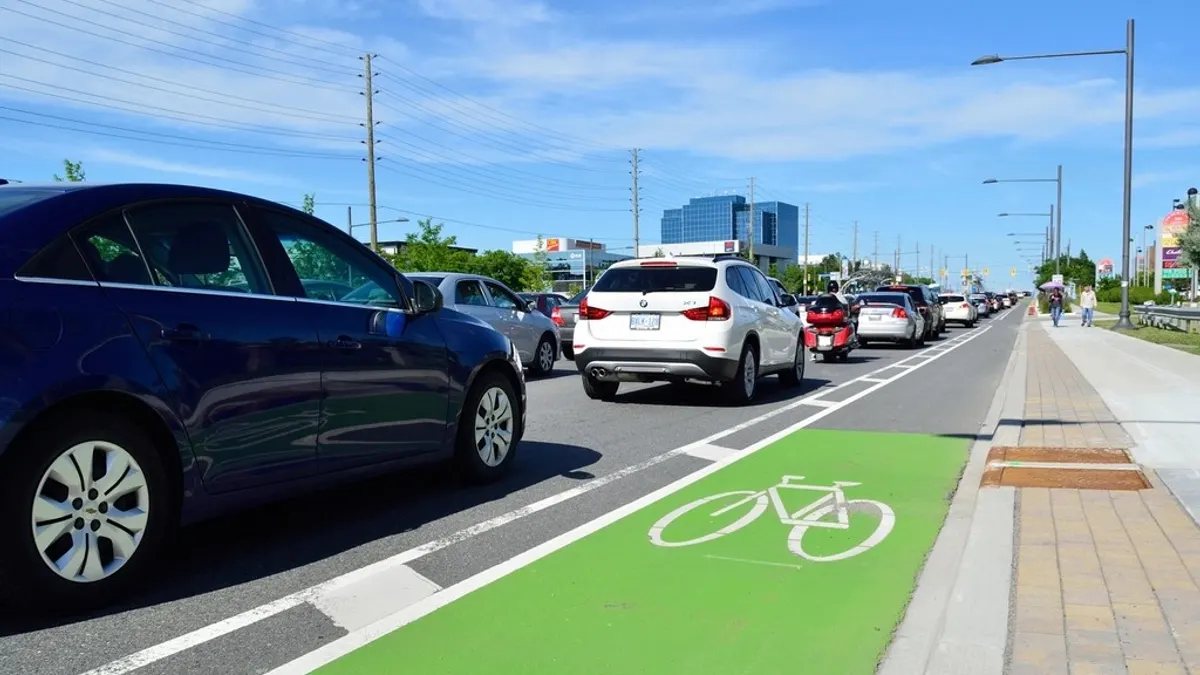
Cover photo: Bicycle lane, CC0 1.0, via rawpixel. Cropped.
Related guides
Electric Unicycle Battery Safety: UL 2272, Charging and Storage
UL 2272 certifies a wheel's electrical system against fire and shock, not how it rides. How to check it, and the charging rules the FDNY and makers agree on.

Electric Unicycle Cutouts and Tiltback Explained
Tiltback is a warning; a cutout is the wheel running out of headroom. What each alarm means, from the makers' own manuals, and how to keep a margin.
Electric Unicycle Laws by State (2026): All 50 States and DC
A state-by-state table of where electric unicycles fit in the law, read from each statute: the seven that cover them, their speed and weight limits, and where you may ride.